
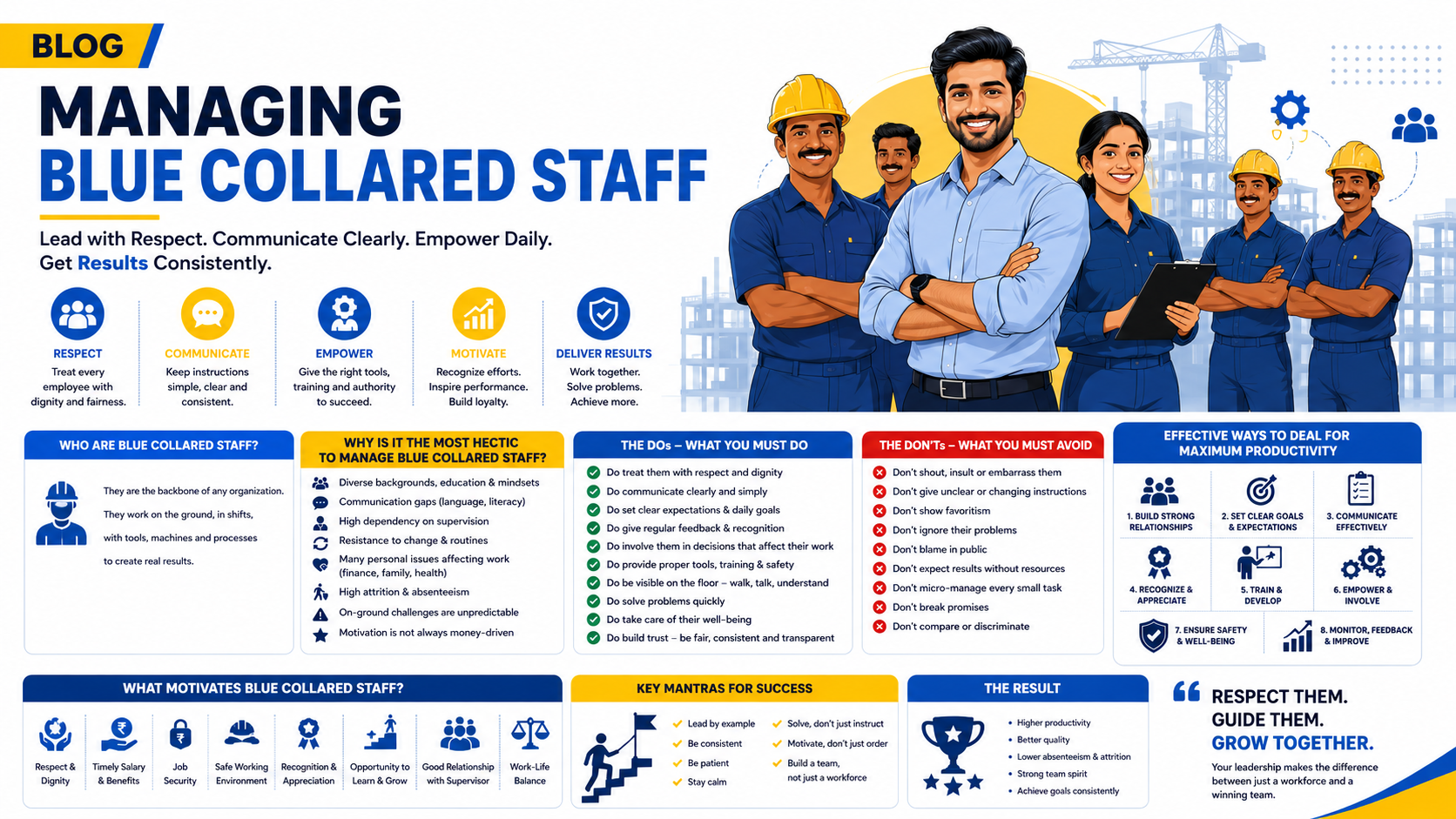
Managing blue-collar staff requires a unique leadership approach that focuses on communication, respect, motivation, and practical problem-solving. Blue-collar employees form the backbone of industries such as manufacturing, construction, logistics, warehousing, hospitality, retail operations, and maintenance services. Effective management of blue-collar staff can significantly improve productivity, employee retention, workplace safety, and overall business performance.
In today’s competitive business environment, organisations that invest in managing blue-collar staff effectively gain a strong operational advantage and build high-performing teams that consistently deliver results.
Why Managing Blue-Collared Staff Is Important
Blue-collar employees work directly on the ground and are responsible for executing daily operations. Their efficiency directly impacts production quality, customer satisfaction, project completion timelines, and profitability.
Effective management of blue-collar staff helps organisations:
- Improve workforce productivity
- Reduce employee turnover
- Enhance workplace safety
- Increase employee engagement
- Build stronger team relationships
- Achieve operational excellence
Leaders who understand the needs of blue-collar workers create a positive work environment where employees feel valued and motivated.
Who Are Blue-Collared Staff?
Blue-collar staff are employees who perform skilled, semi-skilled, or manual labour. They typically work in industries such as:
- Manufacturing
- Construction
- Warehousing
- Logistics
- Hospitality
- Retail Operations
- Maintenance Services
- Engineering Support Services
These employees often work in shifts, operate machinery, handle equipment, and contribute directly to operational success.
Challenges in Managing Blue-Collared Staff
Managing blue-collared staff comes with several unique challenges that leaders must address effectively.
Communication Barriers
Employees may come from diverse educational, cultural, and language backgrounds. Clear communication becomes essential for ensuring workplace efficiency and safety.
High Dependence on Supervision
Many operational roles require regular supervision and guidance, making leadership visibility critical.
Workforce Attrition
High employee turnover can impact productivity and increase recruitment and training costs.
Resistance to Change
Changes in processes, systems, or technology may be met with resistance if employees are not properly informed and trained.
Workplace Stress
Personal, financial, and family challenges can influence employee performance and attendance.
Understanding these challenges is the first step toward successfully managing blue-collared staff.
Best Practices for Managing Blue-Collared Staff
Build Strong Relationships
Employees perform better when they trust their supervisors. Spend time understanding your team’s concerns, strengths, and career goals.
Strong relationships help improve:
- Employee loyalty
- Workplace morale
- Team collaboration
- Productivity levels
Communicate Clearly and Simply
Clear communication is one of the most important aspects of managing blue-collared staff.
Managers should:
- Use simple language
- Provide clear instructions
- Repeat critical information when necessary
- Confirm employee understanding
Face-to-face communication often works best in operational environments.
Set Clear Expectations
Employees need to know exactly what is expected of them.
Clearly define:
- Daily targets
- Quality standards
- Safety requirements
- Performance expectations
When expectations are clear, employees can focus on achieving results without confusion.
Recognise and Appreciate Employees
Recognition plays a major role in workforce motivation.
Simple appreciation methods include:
- Employee recognition programs
- Team celebrations
- Verbal appreciation
- Performance awards
Employees who feel valued are more likely to remain committed to the organisation.
Invest in Training and Development
Continuous learning improves employee performance and confidence.
Training programs should focus on:
- Technical skills
- Safety procedures
- Equipment handling
- Productivity improvement
Organisations that invest in employee development often experience stronger workforce retention.
Dos and Don’ts of Managing Blue-Collar Staff
What Managers Should Do
- Treat employees with respect and dignity
- Listen actively
- Provide constructive feedback
- Be visible on the work floor
- Solve issues quickly
- Support employee well-being
- Build trust through transparency
What Managers Should Avoid
- Micromanaging every task
- Public criticism or humiliation
- Showing favoritism
- Making false promises
- Ignoring employee concerns
- Providing unclear instructions
- Comparing employees unfairly
Following these guidelines strengthens leadership effectiveness and workplace culture.
What Motivates Blue-Collared Employees?
Many managers mistakenly believe that salary is the only motivator. While compensation is important, other factors also influence employee satisfaction.
Key motivators include:
- Respect and recognition
- Timely salary payments
- Job security
- Safe working conditions
- Growth opportunities
- Positive supervisor relationships
- Work-life balance
Understanding these motivators helps leaders create a more engaged workforce.
Leadership Principles for Managing Blue-Collared Staff
Successful leaders consistently follow these principles:
Lead by Example
Employees closely observe leadership behaviour. Managers should demonstrate professionalism, discipline, and accountability.
Stay Consistent
Consistency builds trust and credibility. Employees should know what to expect from their leaders.
Focus on Solutions
Operational challenges occur regularly. Effective managers focus on solving problems instead of assigning blame.
Be Patient
Building a strong workforce requires time, coaching, and continuous support.
Empower Employees
Involve employees in decisions that affect their work and encourage ownership of responsibilities.
Benefits of Effective Blue-Collar Workforce Management
Organisations that excel at managing blue-collar staff often achieve:
- Higher productivity
- Better product and service quality
- Lower absenteeism
- Reduced employee turnover
- Improved workplace safety
- Stronger team morale
- Consistent operational performance
These benefits directly contribute to long-term business growth and profitability.
Conclusion
Managing blue-collar staff successfully requires more than supervision. It demands strong leadership, clear communication, employee engagement, and genuine respect for the workforce. Organisations that invest in managing blue-collar staff effectively create motivated teams that deliver exceptional results.
When leaders focus on trust, recognition, development, and workplace well-being, they transform a workforce into a high-performing team capable of driving sustainable business success.
Follow us Instagram