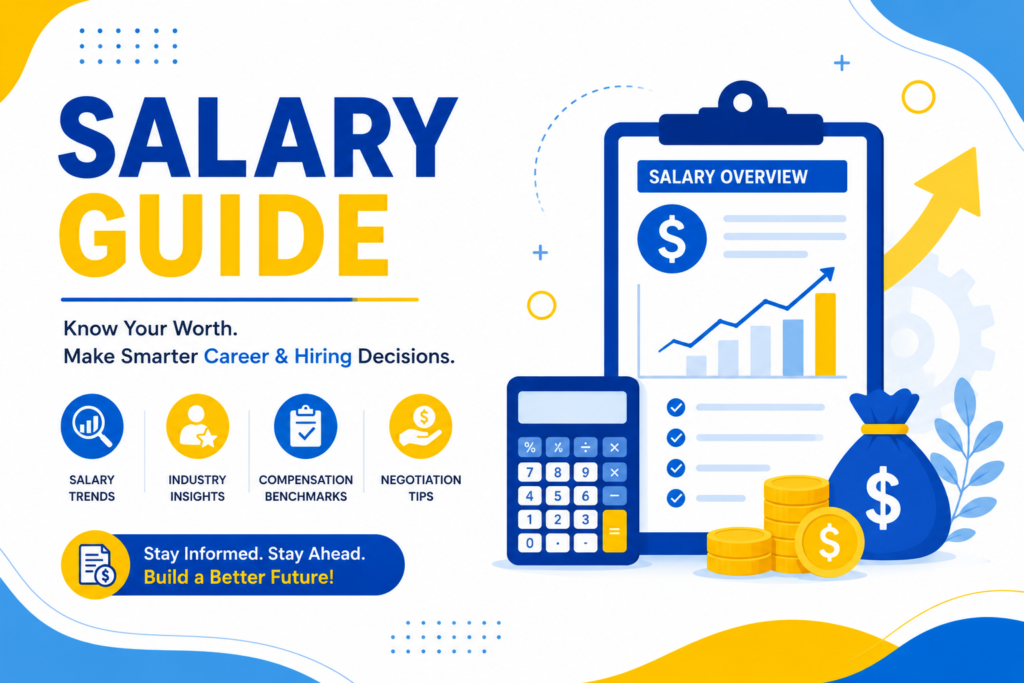
Offering the right salary is one of the most important aspects of recruitment. A competitive compensation package helps businesses attract skilled professionals, improve employee retention, and stay ahead in today’s competitive job market. For job seekers, understanding salary trends ensures they negotiate confidently and make informed career decisions.
This comprehensive Guide explains how salaries are determined, the factors that influence compensation, current hiring trends, and practical tips for both employers and job seekers.
At Paradigm Consultancies, we help businesses hire top talent while ensuring fair and competitive compensation packages. This Guide is designed to help employers and candidates understand the salary landscape and make better hiring decisions.
What is a Salary Guide?
A Salary Guide is a reference that provides estimated salary ranges for different job roles based on industry, experience, qualifications, location, and market demand. Businesses use salary guides to create competitive compensation packages, while job seekers use them to understand their earning potential.
A reliable salary guide helps reduce hiring delays, improves salary negotiations, and supports informed decision-making.
Why is a Salary Guide Important?
For Employers
- Attract top talent
- Reduce employee turnover
- Stay competitive in the job market
- Improve recruitment success
- Plan hiring budgets effectively
- Build a strong employer brand
For Job Seekers
- Understand market salary trends
- Negotiate confidently
- Compare job offers
- Plan career growth
- Set realistic salary expectations
Factors That Affect Salaries
Several factors influence employee salaries across different industries.
1. Experience
Professionals with more experience generally receive higher compensation due to their expertise and proven performance.
2. Skills
Candidates possessing specialized or in-demand skills often command better salary packages.
3. Industry
Salary levels vary significantly between industries such as IT, Manufacturing, Healthcare, Finance, Engineering, and Hospitality.
4. Location
Major metropolitan cities often offer higher salaries than smaller cities because of living costs and market competition.
5. Education
Professional certifications, technical qualifications, and advanced degrees can positively impact salary.
6. Company Size
Large organizations typically provide higher salaries and better employee benefits compared to smaller businesses.
Salary Negotiation Tips for Job Seekers
Negotiating salary requires preparation and confidence.
Here are some useful tips:
- Research industry salary trends.
- Know your market value.
- Highlight your skills and achievements.
- Be confident but realistic.
- Consider total compensation, including bonuses and benefits.
- Maintain professionalism during negotiations.
Tips for Employers Offering Competitive Salaries
To attract and retain skilled employees, employers should:
- Benchmark salaries regularly.
- Review market trends.
- Offer performance-based incentives.
- Provide employee benefits.
- Maintain transparent salary discussions.
- Create opportunities for career growth.
Common Salary Mistakes to Avoid
Both employers and candidates should avoid these common mistakes:
Employers
- Offering below-market salaries
- Delayed salary negotiations
- Lack of salary transparency
- Ignoring market trends
- Overlooking employee benefits
Job Seekers
- Accepting offers without research
- Asking for unrealistic compensation
- Focusing only on salary
- Ignoring growth opportunities
- Not negotiating professionally
Avoiding these mistakes creates a smoother recruitment experience for everyone.
How Paradigm Consultancies Helps
At Paradigm Consultancies, we support businesses and job seekers throughout the recruitment journey.
Our services include:
- Recruitment & Staffing
- HR Outsourcing
- Executive Search
- Permanent Staffing
- Salary Benchmarking
- Candidate Screening
- Interview Coordination
- Career Guidance
- Recruitment Consulting
We use market insights and industry expertise to help employers offer competitive compensation while helping candidates make informed career decisions.
Frequently Asked Questions (FAQs)
1. What is a Salary Guide?
A Guide provides estimated salary ranges for different job roles based on industry, experience, skills, and location.
2. Why should employers use a Salary Guide?
Employers use salary guides to remain competitive, attract skilled professionals, and improve employee retention.
3. How can job seekers benefit from a Salary Guide?
It helps candidates understand their market value, compare job offers, and negotiate salaries confidently.
4. What factors influence salaries?
Experience, education, skills, industry, company size, job location, certifications, and market demand all influence salary levels.
5. Does Paradigm Consultancies help with salary benchmarking?
Yes. We help businesses understand market salary trends and design competitive compensation packages for successful hiring.
6. Should I negotiate my salary?
Yes. Salary negotiation is a normal part of the recruitment process when done professionally and based on market research.
7. Can employers reduce employee turnover by offering competitive salaries?
Absolutely. Competitive compensation combined with career growth opportunities significantly improves employee retention.
Ready to Hire Top Talent?
Whether you’re hiring your next employee or searching for a better career opportunity, Paradigm Consultancies is here to help.
Our recruitment experts provide professional hiring solutions, salary benchmarking, and HR consulting services that help businesses grow and candidates succeed.
Our Services
- Recruitment & Staffing
- Executive Search
- HR Outsourcing
- Permanent Staffing
- Bulk Hiring
- Campus Recruitment
- Salary Benchmarking
- Recruitment Consulting
Contact Paradigm Consultancies Today
📞 Phone: +91 90282 08088
📧 Email: jobs@paradigmc.in
🌐 Website: https://paradigmc.in
📍 Location: Nashik, Maharashtra