Stepping into a management role for the first time can be both exciting and challenging. While technical skills may have earned you the promotion, New Manager Leadership skills will determine your long-term success. Many professionals discover that managing people requires a completely different set of abilities than performing individual tasks.
Effective New Manager Leadership helps build trust, improve team performance, and create a positive workplace culture that drives business results. Whether you are leading a small team or managing an entire department, your ability to inspire, guide, and support employees will define your success as a leader.
Why New Manager Leadership Matters
Successful New Manager Leadership is critical because employees don’t simply follow titles—they follow leaders they trust and respect. A promotion may give you authority, but genuine leadership is earned through actions, communication, and consistency.
Organisations that invest in New Manager Leadership development often experience:
- Higher employee engagement
- Lower staff turnover
- Improved team productivity
- Better workplace morale
- Stronger business performance
Employees want managers who listen, provide guidance, and create growth opportunities. When leaders focus on people as much as performance, teams are more likely to stay motivated and committed.
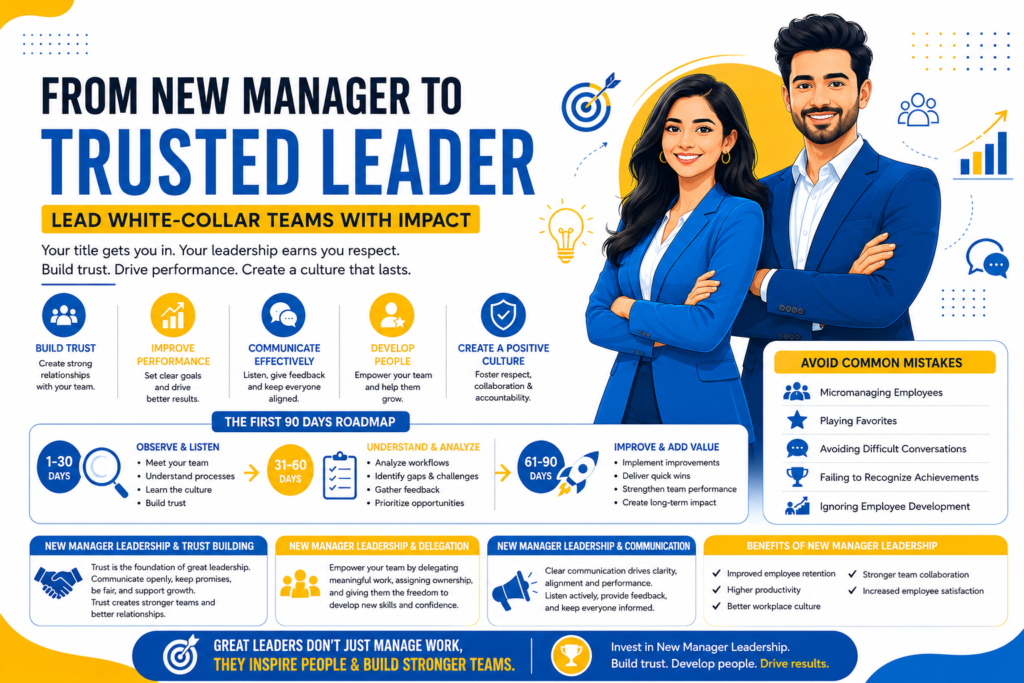
The First 90 Days of New Manager Leadership
The first three months in a management role are crucial for establishing credibility and building relationships. Effective New Manager Leadership starts with understanding your team before making major changes.
Days 1–30: Observe and Listen
During your first month, focus on learning rather than leading through immediate changes.
Key priorities include:
- Meeting team members individually
- Understanding existing processes
- Learning company culture
- Identifying team strengths and challenges
This period is about building trust and gaining valuable insights.
Days 31–60: Understand and Analyse
Once you understand your team better, begin evaluating workflows and performance.
Focus on:
- Identifying process gaps
- Understanding team goals
- Recognising obstacles to success
- Gathering employee feedback
The goal is to understand what is working and what needs improvement.
Days 61–90: Improve and Add Value
After gathering insights, start implementing small but meaningful improvements.
Examples include:
- Improving communication channels
- Clarifying roles and responsibilities
- Setting performance expectations
- Introducing process improvements
Small wins during this phase help establish confidence in your leadership.
Best Practices for New Manager Leadership
Strong New Manager Leadership requires balancing people management with performance management. Great managers know how to achieve results while supporting their teams.
Set Clear Expectations
Employees perform best when they understand exactly what is expected of them.
Clearly define:
- Goals
- Responsibilities
- Deadlines
- Performance standards
Clarity reduces confusion and increases accountability.
Conduct Regular One-on-One Meetings
Frequent one-on-one conversations help managers stay connected with employees.
These meetings provide opportunities to:
- Discuss progress
- Address challenges
- Offer guidance
- Build stronger relationships
Regular communication creates trust and improves engagement.
Recognize Employee Contributions
Recognition is one of the most powerful leadership tools.
Simple gestures such as:
- Saying thank you
- Celebrating achievements
- Acknowledging effort publicly
can significantly improve morale and motivation.
Delegate Effectively
Many new managers struggle with delegation because they feel responsible for every outcome.
However, successful New Manager Leadership involves empowering employees to take ownership of their work. Delegation develops skills, builds confidence, and allows managers to focus on strategic priorities.
New Manager Leadership and Trust Building
Trust is the foundation of New Manager Leadership. Without trust, teams struggle to collaborate effectively and perform at their highest potential.
Employees want leaders who:
- Communicate honestly
- Keep their commitments
- Treat everyone fairly
- Support professional growth
Building trust takes time, but it creates a stronger and more productive workplace culture.
New Manager Leadership and Communication
Clear communication is one of the most important aspects of New Manager Leadership. Employees perform better when they understand expectations and feel comfortable sharing ideas and concerns.
Effective communication includes:
- Active listening
- Providing constructive feedback
- Encouraging open discussions
- Sharing organizational goals
Good communication eliminates misunderstandings and strengthens team alignment.
Common Mistakes in New Manager Leadership
Even talented professionals can struggle when transitioning into management. Avoiding common mistakes is essential for long-term success.
Some of the most frequent leadership mistakes include:
Micromanaging Employees
Constant supervision can reduce employee confidence and creativity.
Playing Favorites
Favoritism damages trust and negatively impacts team morale.
Avoiding Difficult Conversations
Addressing performance issues early prevents larger problems later.
Failing to Recognize Achievements
Employees who feel appreciated are more engaged and productive.
Ignoring Employee Development
Investing in employee growth improves retention and team performance.
Benefits of New Manager Leadership
Organisations that prioritise New Manager Leadership enjoy significant advantages.
Some of the key benefits include:
- Improved employee retention
- Higher productivity levels
- Better workplace culture
- Stronger collaboration
- Increased employee satisfaction
- Enhanced business performance
Strong leadership creates an environment where employees feel valued, supported, and motivated to perform their best.
Conclusion
Becoming a successful manager is a journey that requires continuous learning and improvement. Effective New Manager Leadership is not about authority—it’s about building trust, developing people, and creating a culture where teams can thrive.
By focusing on communication, delegation, accountability, and employee development, first-time managers can transform themselves into trusted leaders. Remember, great leaders don’t just manage work—they inspire people, build confidence, and help others achieve their full potential.
The most successful managers understand a simple truth: when people grow, businesses grow too.