
Resume Writing: The Ultimate Guide to Creating a Professional Resume That Gets You Hired
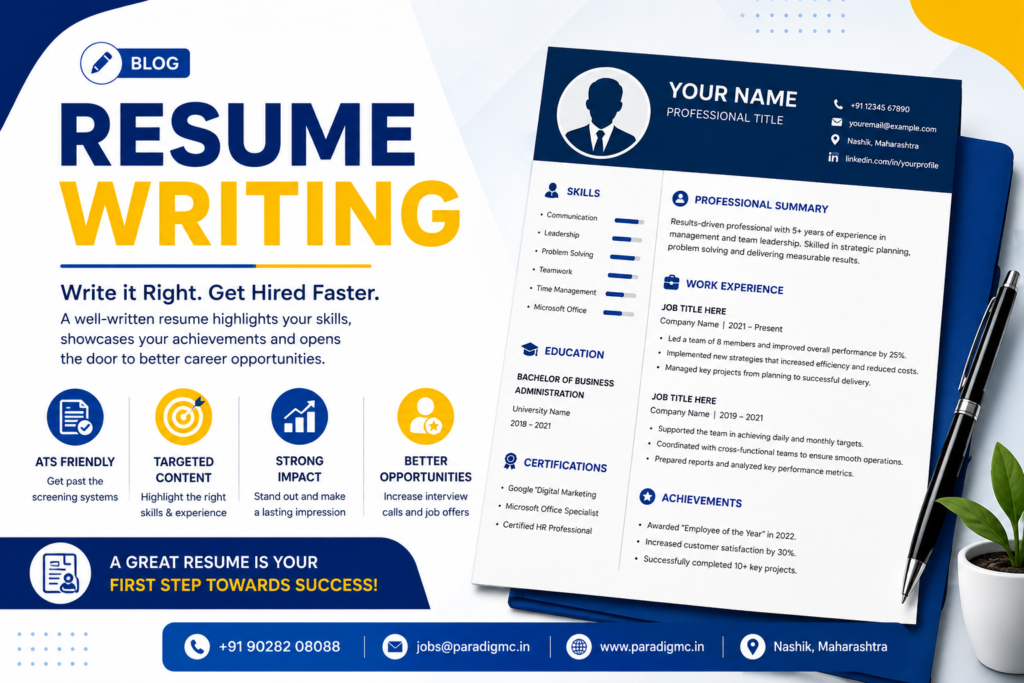
A resume is your first opportunity to impress a recruiter. In today’s competitive job market, employers often spend only a few seconds reviewing a resume before deciding whether to shortlist a candidate. That’s why effective Resume Writing is essential for anyone looking to secure their dream job. Whether you’re a fresher or an experienced professional, a well-written resume can significantly improve your chances of getting interview calls. At Paradigm Consultancies, we help job seekers create professional resumes that highlight their strengths and increase their chances of getting hired. Why Resume Writing is Important Your resume is more than just a list of qualifications and work experience. It is a marketing document that showcases your skills, achievements, and career journey. Professional Resume Writing helps you: A professionally written resume gives recruiters confidence in your abilities before they even meet you. Essential Sections Every Resume Should Include 1. Contact Information Always include: Ensure your contact information is accurate and easy to find. 2. Professional Summary A strong professional summary introduces you in 3–5 lines. It should include: This section immediately captures the recruiter’s attention. 3. Work Experience List your work experience in reverse chronological order. Include: Focus on measurable accomplishments rather than simply listing duties. 4. Education Mention: 5. Skills Include both technical and soft skills. Examples: Choose skills relevant to the job you’re applying for. 6. Certifications Professional certifications increase your credibility. Examples include: Resume Writing Tips for Freshers Freshers often worry about having limited experience. Instead, focus on: A well-structured resume can still make a strong impression. Resume Writing Tips for Experienced Professionals Experienced candidates should highlight: Recruiters value measurable achievements more than job responsibilities. Common Resume Writing Mistakes Avoid these mistakes: Avoiding these mistakes improves readability and increases interview opportunities. ATS-Friendly Resume Writing Most companies now use Applicant Tracking Systems (ATS) to screen resumes. To create an ATS-friendly resume: Professional Resume Writing helps ensure your resume reaches recruiters instead of being filtered out. Why Choose Professional Resume Writing Services? Professional resume writers understand what recruiters look for. Benefits include: A professionally written resume can significantly increase your interview success rate. How Paradigm Consultancies Helps Job Seekers At Paradigm Consultancies, we support candidates throughout their career journey. Our services include: We help candidates present themselves professionally and connect them with leading employers. Frequently Asked Questions (FAQs) 1. What is Resume Writing? Resume Writing is the process of creating a professional document that highlights your qualifications, experience, skills, and achievements to help you secure job interviews. 2. Why is Resume Writing important? A well-written resume creates a strong first impression, improves ATS compatibility, and increases your chances of getting shortlisted. 3. How long should a resume be? Freshers should ideally have a one-page resume, while experienced professionals can have two pages depending on their experience. 4. Should I customize my resume for every job? Yes. Tailoring your resume with relevant skills and keywords significantly improves your chances of getting shortlisted. 5. What should I avoid on my resume? Avoid spelling mistakes, unnecessary personal information, lengthy paragraphs, irrelevant work experience, and outdated formats. 6. Does Paradigm Consultancies help with Resume Writing? Yes. We provide professional Resume Writing, interview preparation, career counseling, and placement assistance to help candidates achieve their career goals. Ready to Build a Resume That Gets Results? Your resume is your personal brand. A professionally written resume can open doors to exciting career opportunities. At Paradigm Consultancies, we help job seekers create impactful resumes that attract recruiters and improve interview success. Our Career Services Contact Paradigm Consultancies Today 📞 Phone: +91 90282 08088 📧 Email: jobs@paradigmc.in 🌐 Website: https://paradigmc.in 📍 Location: Nashik, Maharashtra Take the next step in your career with Paradigm Consultancies and let our Resume Writing experts help you create a resume that gets noticed.