Introduction
As businesses grow, managing employees becomes increasingly complex. Maintaining attendance records, processing leave requests, coordinating payroll and keeping employee documents organised requires time, accuracy and consistent processes.
For small and medium businesses, these responsibilities can become challenging when handled manually or without dedicated HR support. Errors in salary inputs, missing documents and inconsistent attendance records can create administrative difficulties and affect employee satisfaction.
Payroll and HR administration services help businesses organise essential employee-related processes, improve record management and reduce the administrative workload on internal teams.
In this guide, we explore the key components of payroll and HR administration, common mistakes businesses should avoid and how professional HR support can help growing organisations.
What Is Payroll and HR Administration?
Payroll and HR administration involves managing the routine processes associated with employees throughout their employment.
Payroll administration focuses on collecting and validating salary-related information, including attendance, leave, approved deductions, incentives and other salary components.
HR administration covers broader employee processes such as documentation, onboarding, employee records, leave management and maintaining HR-related information.
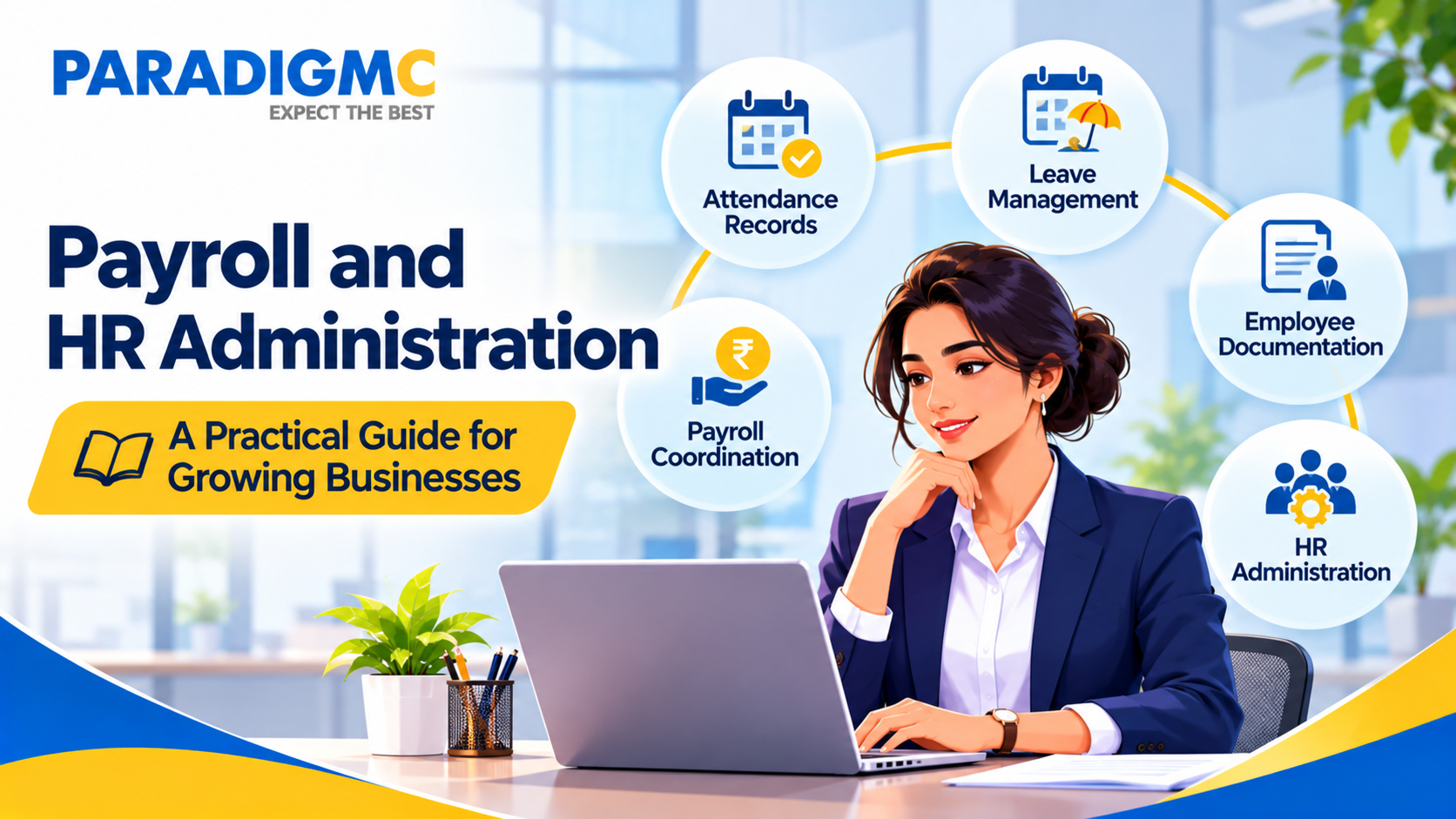
Depending on the service agreement, payroll and HR administration services may include payroll coordination, employee database management, attendance tracking, documentation support and HR reporting.
Key Components of Payroll and HR Administration
1. Attendance Record Management
Accurate attendance records are essential for managing employee working hours and preparing payroll inputs.
Businesses may use biometric systems, attendance software, timesheets or approved manual records. The important requirement is to maintain a consistent process for recording attendance and correcting discrepancies.
HR teams should regularly review:
- Employee attendance and working hours.
- Late arrivals and early departures.
- Shift schedules and overtime records.
- Missing attendance entries.
- Manager-approved corrections.
Maintaining accurate attendance data helps minimise payroll errors and provides better visibility into workforce attendance patterns.
2. Leave Management
Leave management involves tracking employee leave balances, applications, approvals and absences according to company policies and applicable requirements.
A structured leave process should clearly define:
- Types of leave available.
- Leave eligibility and accrual rules.
- Application and approval procedures.
- Leave balance calculations.
- Treatment of leave during payroll processing.
Using a centralised leave management system can help reduce confusion, improve transparency and make employee records easier to maintain.
3. Payroll Coordination
Payroll coordination requires collecting and validating information before salaries are processed.
Common payroll inputs include:
- Employee salary details.
- Attendance and payable days.
- Approved leave and unpaid leave.
- Overtime and incentives.
- Approved deductions.
- New employee joining details.
- Employee exit and final settlement inputs.
A defined payroll calendar helps ensure that information is submitted, reviewed and approved on time.
Businesses should clarify whether their payroll and HR administration services provider handles payroll coordination only or also performs payroll calculations, payslip preparation, statutory filings or salary payment administration.
4. Employee Documentation
Employee documentation helps maintain organised and accessible records throughout the employee lifecycle.
Common documents include appointment letters, employment agreements, joining forms, policy acknowledgements, qualification documents and employee information records.
Businesses should establish procedures for collecting, updating, storing and accessing employee documents.
Employee records contain personal information, so access should be restricted to authorised personnel. Data should be stored securely and retained according to applicable requirements.
5. Employee Onboarding and Exit Administration
Employee onboarding includes completing joining formalities, collecting required documents, preparing employment records and coordinating initial HR processes.
Exit administration may involve recording resignation details, updating employee status, coordinating clearance procedures and providing final payroll inputs.
A standard checklist for onboarding and exits helps ensure that important administrative steps are not missed.
Common Payroll and HR Administration Errors
Growing businesses may encounter several recurring issues.
Incorrect Attendance and Leave Data
Missing attendance entries or incorrect leave balances can result in inaccurate salary inputs. Regular reconciliation and approval procedures help minimise these problems.
Late Payroll Inputs
When attendance, incentives or deductions are submitted after the payroll deadline, salary processing may be delayed.
Establishing a fixed payroll calendar and assigning clear responsibilities helps improve coordination.
Incomplete Employee Records
Missing employee documents or outdated information can create administrative difficulties. Conduct periodic employee-record reviews and update information when necessary.
Manual Data Entry Errors
Repeatedly entering employee information into multiple systems can increase the risk of errors. Where practical, use standard templates or integrated systems and verify important information before processing.
Unclear HR Policies
Employees and managers may interpret leave rules, attendance requirements or approval procedures differently.
Document policies clearly, communicate them to employees and ensure managers follow consistent procedures.
Best Practices for Growing Businesses
Businesses can improve their payroll and HR administration processes by following these practical steps:
- Create standard operating procedures: Document attendance, leave, payroll inputs and employee record processes.
- Maintain a payroll calendar: Establish deadlines for data collection, review and approval.
- Use organised employee records: Keep employee information updated and securely stored.
- Assign clear responsibilities: Define who prepares, reviews and approves payroll inputs.
- Conduct periodic reconciliations: Compare attendance, leave and payroll information before processing.
- Protect employee information: Restrict access and use secure systems for sharing records.
- Review processes regularly: Identify recurring errors and improve workflows.
These practices can help organisations develop more consistent HR administration as their workforce expands.
When Should a Business Consider HR Administration Support?
External HR administration support may be useful when:
- The business is growing and employee records are becoming difficult to manage.
- HR teams spend excessive time on routine administrative work.
- Attendance and leave processes are inconsistent.
- Payroll inputs frequently require corrections.
- Employee onboarding and exit processes need better organisation.
- The organisation does not have a dedicated HR administration team.
Outsourcing selected tasks can help businesses manage administrative workloads. However, employers should clearly define the service scope, responsibilities, confidentiality requirements and applicable compliance obligations.
How Paradigm Consultancies Can Help
Paradigm Consultancies provides recruitment and HR services to businesses in Nashik. Growing organisations can contact the team to discuss their recruitment requirements and clarify the availability of HR administration support.
Businesses looking for assistance with employee documentation, attendance processes, payroll coordination or related HR activities should confirm the exact deliverables and service arrangements with the consultancy.
The objective is to help organisations establish more organised workforce processes while allowing business owners and internal teams to focus on their core operations.
Contact Paradigm Consultancies
Paradigm Consultancies – Recruitment & HR Solutions
- Phone: +91 90282 08088
- Email: jobs@paradigmc.in
- Website: https://paradigmc.in/
- Location: Indira Nagar, Nashik, Maharashtra
Looking to streamline your HR processes? Contact Paradigm Consultancies to discuss your business requirements and explore suitable HR support.
Frequently Asked Questions (FAQs)
1. What are payroll and HR administration services?
Payroll and HR administration services support employee-related processes such as attendance records, leave management, payroll coordination, employee documentation and HR record maintenance.
2. Why is payroll coordination important for businesses?
Payroll coordination helps ensure that salary inputs, attendance, approved leave, incentives and deductions are collected and reviewed accurately before payroll processing.
3. Can small businesses outsource HR administration?
Yes. Small businesses may outsource selected HR administrative activities when internal resources are limited. The services and responsibilities should be clearly defined in the agreement.
4. What is included in employee documentation?
Employee documentation may include appointment letters, employment agreements, joining forms, employee details, policy acknowledgements and relevant qualification records.
5. How can businesses reduce payroll errors?
Businesses can establish payroll deadlines, validate attendance and leave records, assign approval responsibilities and reconcile payroll inputs before processing.
6. Does HR administration outsourcing include salary payments?
Not necessarily. Some providers offer payroll coordination, while others may provide broader payroll processing. Employers should confirm whether calculations, payslips, filings and salary payments are included.
7. How does leave management affect payroll?
Approved leave, unpaid leave and leave balances can affect payroll inputs. Accurate leave records help ensure that salary calculations are based on the correct information.
8. How can Paradigm Consultancies support businesses?
Paradigm Consultancies offers recruitment and HR services. Businesses can contact the team to discuss their HR administration requirements and confirm the available support.
Conclusion
Effective payroll and HR administration helps businesses maintain accurate employee records, organise attendance and leave processes, coordinate payroll inputs and improve administrative efficiency.
As organisations grow, standardised procedures and clearly assigned responsibilities become increasingly important. By reviewing current processes and identifying areas that need support, businesses can build a more organised HR administration system.
Connect with Paradigm Consultancies to discuss your recruitment and HR requirements.