Introduction
Hiring skilled technology professionals is essential for businesses that want to improve productivity, strengthen their digital infrastructure and remain competitive. However, finding candidates with the right technical knowledge, practical experience and problem-solving abilities can be challenging.
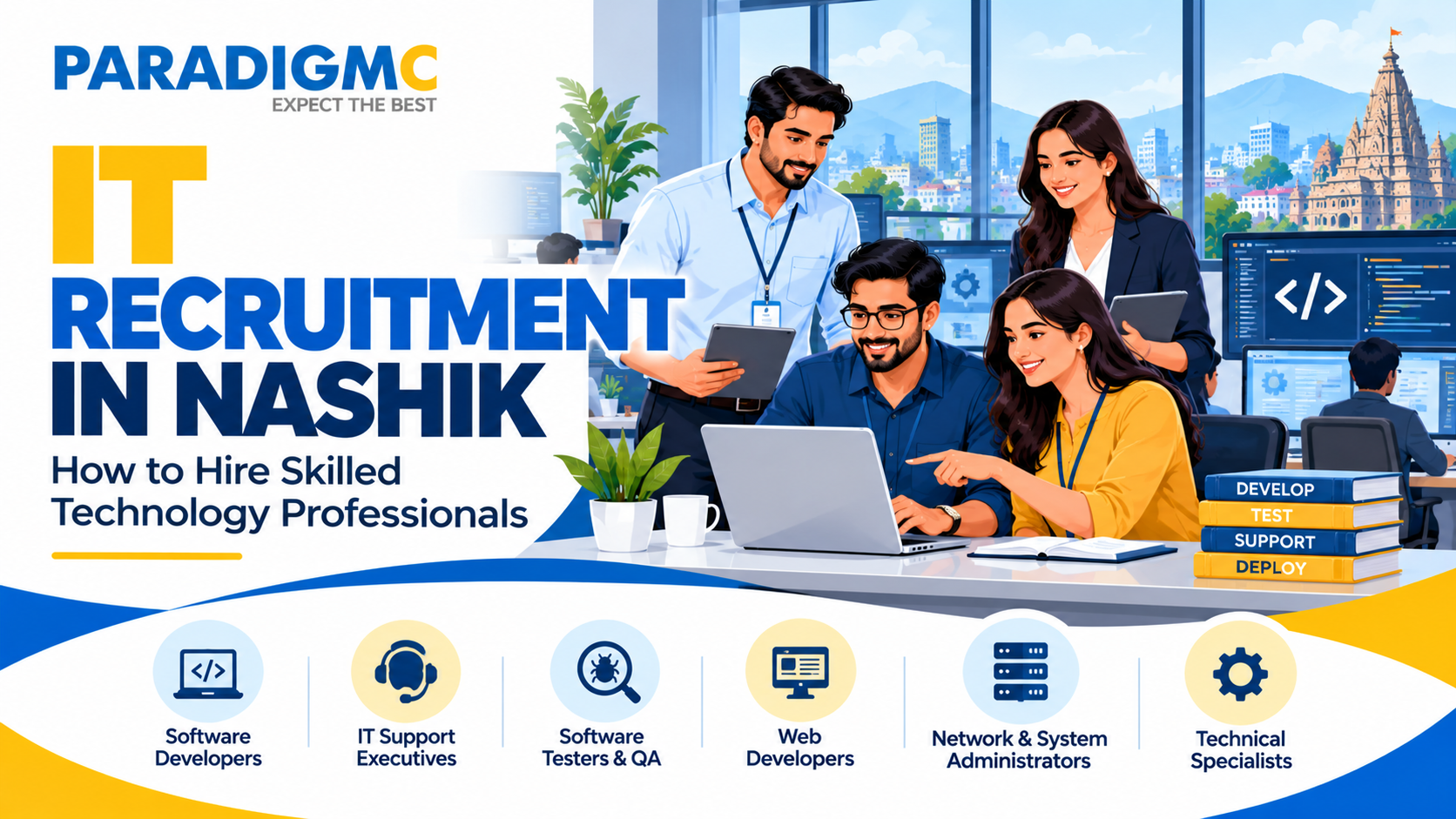
IT recruitment in Nashik helps companies connect with suitable technology professionals for roles such as software developers, IT support executives, software testers, web developers and technical specialists. A structured recruitment process allows employers to evaluate candidates more effectively and make informed hiring decisions.
Whether you are a growing business, an established company or a technology-driven organisation, partnering with a recruitment consultancy can help simplify candidate sourcing, screening and interview coordination.
Why IT Recruitment in Nashik Matters for Growing Businesses
Businesses increasingly depend on software, digital platforms, networks and technology systems to manage daily operations. Hiring the right people is important for maintaining these systems and supporting future growth.
A professional approach to IT recruitment in Nashik can help employers address several hiring challenges:
- Finding candidates with relevant technical skills.
- Evaluating practical knowledge beyond academic qualifications.
- Identifying professionals who can solve real-world problems.
- Reducing the time spent reviewing unsuitable applications.
- Coordinating technical interviews and candidate feedback.
- Hiring employees who fit the role and company culture.
A well-planned hiring process can improve recruitment efficiency, although actual results depend on the job requirements, candidate availability and employer decision-making.
IT Positions Companies Can Hire For
Technology recruitment covers a wide range of job roles. Employers should define the required skills, experience and responsibilities before beginning the search.
1. Software Developers
Software developers build, test and maintain applications, websites and business software. Depending on the vacancy, employers may seek candidates with knowledge of Java, Python, JavaScript, C#, PHP or other programming languages.
During selection, evaluate coding fundamentals, debugging skills, project experience and the candidate’s ability to explain technical decisions.
2. IT Support Executives
IT support professionals help employees resolve hardware, software, network and access-related problems. They may also assist with system installation, troubleshooting and routine IT maintenance.
Useful assessment areas include operating-system knowledge, networking basics, ticket handling, communication and troubleshooting methodology.
3. Software Testers and QA Engineers
Software testers help identify defects and verify that applications meet functional and quality requirements. Roles may involve manual testing, test-case preparation, regression testing or automation tools.
Employers should assess attention to detail, test-design knowledge, bug reporting and familiarity with the tools required for the position.
4. Web Developers
Web developers create and maintain websites and web applications. Depending on the role, candidates may specialise in front-end development, back-end development or full-stack technologies.
Review portfolio projects, coding quality, responsive-design knowledge, API integration and familiarity with the employer’s technology stack.
5. Network and System Administrators
These professionals help maintain computer networks, servers, user access and business infrastructure. Relevant knowledge may include network troubleshooting, system administration, backup procedures and security practices.
6. Technical Support and Application Specialists
Technical support specialists assist customers or internal teams with software and product-related issues. Employers should evaluate product knowledge, diagnostic skills, clear communication and the ability to explain technical concepts to non-technical users.
How to Choose the Right IT Recruitment Consultancy in Nashik
Selecting a recruitment partner is an important step for businesses that want to hire technology professionals efficiently. The right consultancy should understand the job requirements, source relevant candidates and coordinate the hiring process transparently.
When evaluating an agency for IT recruitment in Nashik, consider these factors:
- Technology role understanding: Can the recruiter understand the difference between a developer, tester, network administrator and IT support executive?
- Candidate sourcing: Does the agency use relevant sourcing channels to identify candidates with suitable experience?
- Technical screening: Can it coordinate technical assessments or help arrange evaluations by qualified technical interviewers?
- Communication: Does the recruiter provide clear updates on candidate progress and interview scheduling?
- Hiring flexibility: Can the agency support permanent recruitment, contract hiring or multiple vacancies, depending on your requirements?
- Transparent terms: Are the service scope, fees, payment conditions and replacement policy documented clearly?
A recruitment partner should be able to explain its process and capabilities without promising guaranteed placements or unrealistic hiring timelines.
Technical Screening and Candidate Evaluation
A resume can show a candidate’s qualifications, but it may not fully demonstrate practical ability. Technical screening helps employers assess whether applicants can perform the work required for the position.
A reliable assessment process for IT recruitment in Nashik can include the following stages.
Step 1: Review the Resume and Project Experience
Check whether the candidate’s experience matches the job description. For developers, review relevant projects, programming languages and contributions. For IT support candidates, look for experience with operating systems, hardware, networks and troubleshooting.
Step 2: Conduct a Technical Assessment
Choose an assessment that reflects the actual role. This might include a coding task for developers, test-case preparation for QA candidates or a troubleshooting scenario for IT support professionals.
Keep the assessment relevant to the work and appropriate to the candidate’s seniority.
Step 3: Evaluate Problem-Solving Skills
Ask candidates to explain how they approach a technical problem, identify its likely cause and decide on a solution. Understanding their reasoning can be as valuable as checking whether they reach the correct answer.
Step 4: Assess Communication and Collaboration
Technology professionals often work with colleagues, clients and non-technical departments. Evaluate how clearly candidates explain technical information, receive feedback and collaborate with others.
Step 5: Verify Relevant Information
Where appropriate, verify employment history, education and professional references with suitable consent and in accordance with applicable privacy requirements.
Step 6: Compare Candidates Against Consistent Criteria
Use a structured scorecard covering essential technical skills, relevant experience, problem-solving, communication and role suitability. Consistent evaluation helps employers compare applicants more fairly.
Common IT Hiring Mistakes to Avoid
Businesses can make recruitment more effective by avoiding several common mistakes:
- Writing vague job descriptions: Specify essential technologies, responsibilities and experience requirements.
- Expecting every skill: Separate must-have capabilities from skills that can be learned after joining.
- Relying only on certificates: Validate practical knowledge through relevant assessments and project discussions.
- Delaying interview feedback: Slow decisions can cause suitable candidates to lose interest or accept other offers.
- Ignoring role fit: Consider teamwork, communication and working expectations alongside technical competence.
- Using identical assessments for every role: Tailor evaluation methods to the actual responsibilities of the position.
For employers, a clear hiring brief and an organised decision-making process can make IT recruitment in Nashik more focused and manageable.
How Paradigm Consultancies Supports IT Hiring
Paradigm Consultancies lists IT and technology recruitment among its industry-specific hiring services. Its recruitment and HR solutions include job profiling, candidate sourcing and screening, interview coordination and background verification.
Businesses looking for IT recruitment in Nashik can discuss their technology hiring requirements with the consultancy, including:
- Software development and programming roles.
- IT support and infrastructure positions.
- Software testing and quality assurance roles.
- Technical support and specialist vacancies.
- Permanent or contract recruitment needs.
The exact recruitment approach should be agreed upon according to the role, experience level, hiring volume and services required.
Call to Action: Hire IT Professionals with Paradigm Consultancies
Finding the right technology professionals starts with a clear understanding of your business needs. Define the role, identify essential technical skills and use a structured evaluation process to make informed hiring decisions.
If your company needs support with IT recruitment in Nashik, contact Paradigm Consultancies to discuss your vacancies and recruitment requirements.
Paradigm Consultancies — Recruitment & HR Solutions
- Website: www.paradigmc.in
- Email: info@paradigmc.in
- Phone: +91 88088 79039
- Location: Indira Nagar, Nashik, Maharashtra
Share the job description, required technologies, experience range, number of vacancies and preferred joining timeline so the recruitment team can understand your needs.
Frequently Asked Questions (FAQs)
1. What is IT recruitment in Nashik?
IT recruitment in Nashik is the process of identifying, screening and hiring technology professionals for companies based in Nashik or hiring for relevant locations. It can cover developers, IT support executives, testers and infrastructure specialists.
2. Which IT positions can a recruitment consultancy help fill?
Depending on the service scope, a consultancy may assist with software developers, web developers, QA testers, IT support executives, network administrators, technical support specialists and other technology roles.
3. How are IT candidates technically screened?
Technical screening may include resume evaluation, coding exercises, troubleshooting scenarios, technical interviews, project discussions and role-specific assessments. The method should reflect the skills needed for the vacancy.
4. Can a recruitment agency help with experienced software developers?
Recruitment agencies may help employers source and shortlist developers with relevant experience. Availability depends on the required technology stack, seniority, compensation and candidate preferences.
5. Can companies hire IT freshers in Nashik?
Yes. Employers can recruit eligible fresh graduates for trainee developer, junior QA, IT support and other entry-level roles. Candidates should be evaluated against the requirements of each position.
6. What information should employers provide before starting recruitment?
Share the job description, required skills, experience range, salary budget, work location, employment type, number of openings and target joining date. This helps establish a clear recruitment brief.
7. How long does IT recruitment take?
Hiring timelines vary by role complexity, candidate availability, interview stages and employer response time. Specialist or senior positions may require a longer search than entry-level vacancies.
8. Why should a company use an IT recruitment consultancy?
A consultancy can help with candidate sourcing, initial screening and interview coordination, potentially reducing the administrative burden on internal teams. Outcomes depend on the quality of the hiring brief, available candidates and the recruitment process.
9. Does Paradigm Consultancies provide IT recruitment services?
Paradigm Consultancies lists IT and technology recruitment among its hiring solutions. Employers can contact the team to confirm support for specific technology roles and current requirements.