Introduction
Employee turnover can be expensive for small and medium businesses (SMEs). When employees leave frequently, companies spend additional time and money on recruitment, training and onboarding. Frequent departures can also affect productivity, customer relationships and team morale.
Implementing effective employee retention strategies for SMEs helps businesses create a positive workplace, retain experienced employees and build stronger teams. Retention does not always require expensive benefits. Clear communication, fair compensation, employee recognition and career development can make a meaningful difference.
In this guide, we explore practical employee retention strategies that SMEs can implement to improve employee satisfaction and support long-term business growth.
Why Do Employees Leave Small and Medium Businesses?
Before implementing employee retention strategies for SMEs, employers should understand why employees resign. Common reasons include:
- Limited career growth and promotion opportunities.
- Uncompetitive salaries or unclear incentives.
- Poor communication with managers.
- Excessive workloads and work-life imbalance.
- Lack of recognition for good performance.
- Inadequate training and unclear job responsibilities.
- Better opportunities offered by other employers.
Conducting exit interviews, reviewing employee feedback and identifying turnover patterns can help businesses understand the real causes of attrition.
7 Effective Employee Retention Strategies for SMEs
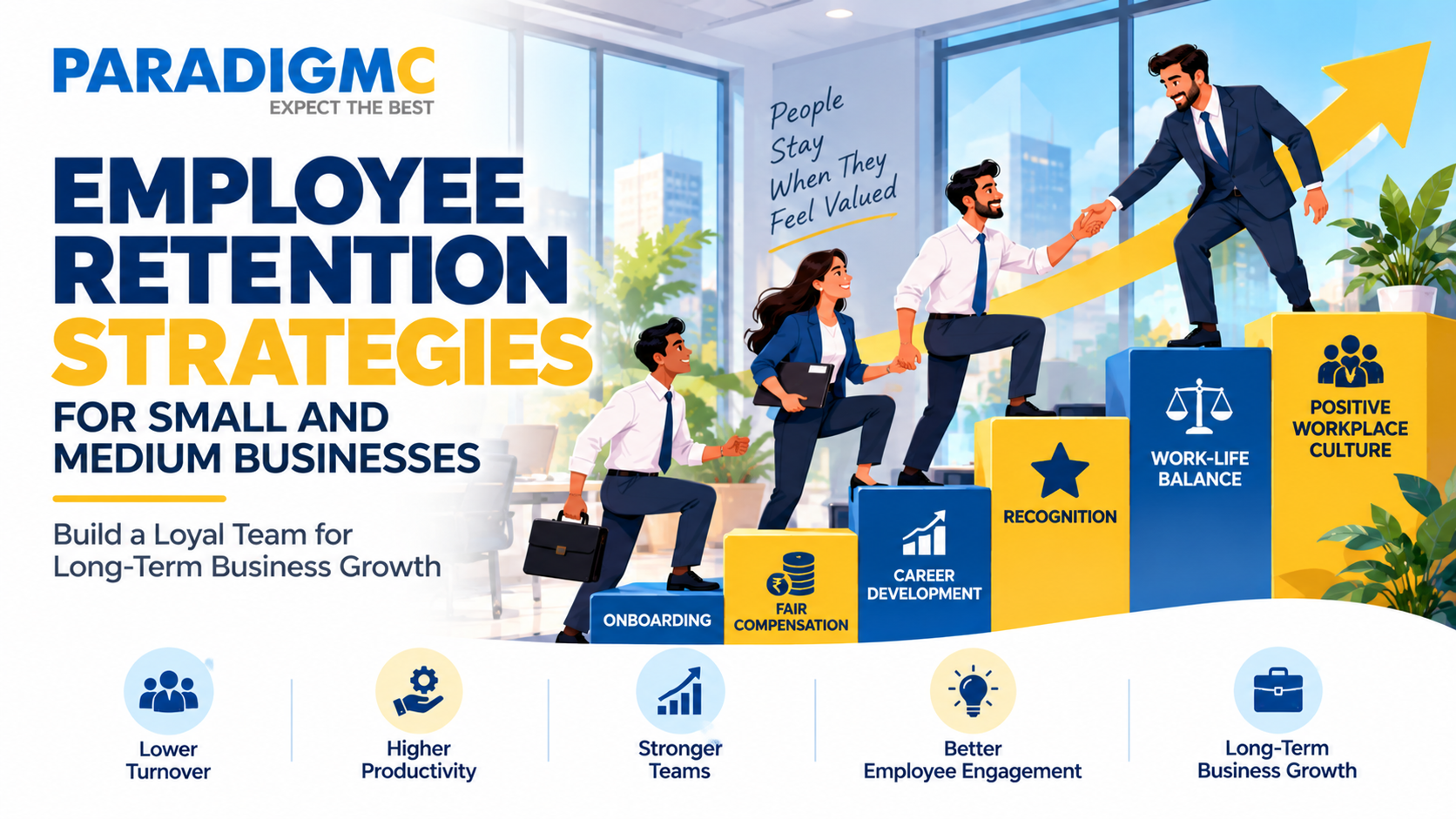
1. Improve Employee Onboarding
An employee’s first few weeks can influence their long-term experience with the organisation. Provide a structured onboarding process that explains job responsibilities, company policies, reporting structures and performance expectations.
Assign a colleague or supervisor to guide new employees and schedule regular check-ins during their initial months. Effective onboarding helps employees feel supported and understand how their work contributes to business goals.
2. Offer Fair and Competitive Compensation
Salary is not the only factor affecting retention, but employees want compensation that reflects their responsibilities, skills and contribution.
Review salary benchmarks where practical, communicate incentive structures clearly and ensure employees understand how performance-based rewards are calculated. SMEs can also consider benefits such as flexible working arrangements, learning support or additional leave, depending on business requirements.
3. Create Career Development Opportunities
Employees are more likely to stay when they can see opportunities to learn and progress. Career development does not always require a formal promotion.
Provide practical training, mentoring, cross-functional exposure and opportunities to take on additional responsibilities. Discuss individual career goals during performance reviews and establish realistic development plans.
These employee retention strategies for SMEs can help businesses develop internal talent instead of relying entirely on external recruitment.
4. Recognise Employee Contributions
Recognition helps employees understand that their efforts matter. Managers can acknowledge strong performance, teamwork, customer service and improvements in productivity.
Recognition may include a personal thank-you, team appreciation, performance awards or transparent incentive programmes. Keep the process fair and consistent so that employees understand how contributions are recognised.
5. Encourage Open Communication
Employees should feel comfortable discussing workplace challenges, expectations and ideas with their managers.
Schedule regular one-to-one meetings, conduct anonymous feedback surveys where appropriate and communicate important organisational changes clearly. Most importantly, act on reasonable feedback and explain when a suggestion cannot be implemented.
6. Support Work-Life Balance
Excessive workloads and unpredictable schedules can contribute to employee dissatisfaction. Review staffing levels, distribute responsibilities fairly and establish realistic deadlines.
Where the role allows, consider flexible schedules or hybrid working arrangements. For operational roles, communicate shifts in advance and manage overtime responsibly.
7. Build a Positive Workplace Culture
Respectful management, teamwork, fairness and psychological safety contribute to a healthier workplace.
Address inappropriate behaviour promptly, provide equal opportunities and ensure employees understand workplace policies. Managers should lead by example and treat team members consistently.
How to Measure Employee Retention
Businesses should track retention instead of relying only on assumptions about employee satisfaction.
Useful metrics include:
- Employee turnover rate: The proportion of employees who leave during a defined period.
- Retention rate: The proportion of employees who remain during a defined period.
- New-hire turnover: The number of new employees who leave within a specified period.
- Absenteeism: Patterns in employee absence that may indicate workplace concerns.
- Employee satisfaction: Feedback collected through surveys and one-to-one discussions.
Review these indicators regularly and compare results over time. Protect employee confidentiality when collecting and analysing feedback.
How Paradigm Consultancies Can Support Your Workforce
Recruitment is only one part of building a stable workforce. Hiring suitable candidates, setting clear expectations and supporting employees after joining can help businesses improve workforce continuity.
Paradigm Consultancies provides recruitment and HR services to businesses in Nashik. Employers can discuss their hiring requirements and recruitment processes with the team to identify suitable support for their organisation.
If your business is experiencing frequent employee turnover, review the reasons employees leave and combine better hiring practices with practical retention initiatives.
Contact Paradigm Consultancies
- Website: https://paradigmc.in/
- Email: info@paradigmc.in
- Phone: +91 88088 79039
- Location: Indira Nagar, Nashik, Maharashtra
Discuss your workforce requirements and explore recruitment support for your business.
Frequently Asked Questions (FAQs)
1. What are employee retention strategies for SMEs?
Employee retention strategies for SMEs are practical measures that help small and medium businesses encourage employees to remain with the organisation. They include effective onboarding, fair compensation, recognition, career development and open communication.
2. Why is employee retention important for small businesses?
Employee retention helps preserve organisational knowledge, reduce repeated recruitment and training expenses, maintain productivity and support stronger working relationships.
3. How can SMEs retain employees without increasing salaries significantly?
SMEs can improve recognition, provide learning opportunities, communicate clearly, offer mentoring and create a respectful workplace. These measures complement fair compensation but may not replace competitive pay.
4. How does onboarding improve employee retention?
Structured onboarding helps new employees understand their responsibilities, workplace expectations and available support. Regular check-ins can identify concerns before they become reasons to resign.
5. How can businesses measure employee retention?
Businesses can track employee turnover, retention rates, new-hire departures, absenteeism and employee feedback. Consistent measurement helps identify patterns and assess whether initiatives are effective.
6. Can recruitment consultancies help with employee retention?
Recruitment consultancies can support candidate sourcing and selection, helping employers assess role suitability. Long-term retention also depends on management, workplace culture, compensation and career opportunities.
Conclusion
Effective employee retention strategies for SMEs focus on understanding employee needs, improving the workplace experience and providing opportunities for growth. By investing in onboarding, recognition, communication and career development, businesses can work towards a more stable and engaged workforce.
Start by identifying your organisation’s main retention challenges, select a few practical improvements and measure the results over time.