Introduction
Hiring the right employee is essential for business growth, workplace safety and operational efficiency. However, reviewing a resume and conducting an interview may not be enough to confirm a candidate’s qualifications, employment history and professional references.
Employee background verification in India helps employers validate relevant candidate information before making a final hiring decision. A structured verification process can help identify discrepancies, reduce hiring risks and support informed recruitment decisions.
Whether you run a small business, a manufacturing company, an IT organisation or a hospitality business, having a consistent verification checklist can make pre-employment screening more organised and reliable.
What Is Employee Background Verification?
Employee background verification is the process of checking information provided by a candidate during recruitment. The checks depend on the job role, industry, seniority and employer requirements.
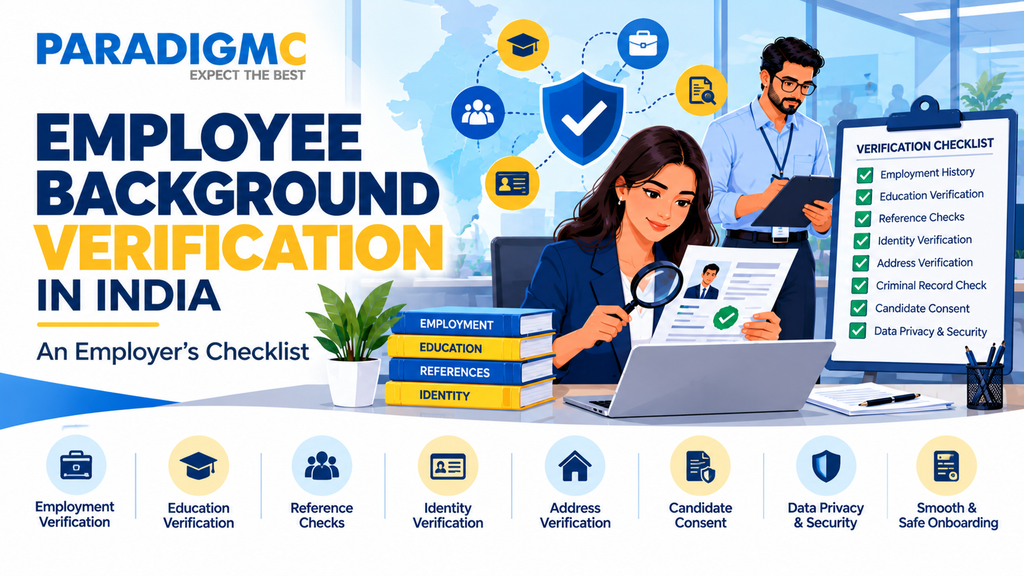
Common verification activities include:
- Employment history verification
- Education and qualification verification
- Professional reference checks
- Identity verification
- Address verification, where relevant
- Role-specific licence or certification checks
- Criminal record checks, where lawful and appropriate
Not every position requires every check. Employers should identify which checks are necessary and proportionate to the responsibilities of the role.
Why Is Background Verification Important for Employers?
A structured employee background verification process helps businesses confirm important details before onboarding.
1. Validate candidate information: Verify relevant qualifications, previous employment and credentials.
2. Reduce hiring risks: Identify material discrepancies that may require clarification before a decision is made.
3. Support workplace safety: Apply additional, role-appropriate checks where positions involve sensitive information, financial responsibility or safety-critical duties.
4. Protect business interests: Confirm that candidates meet the documented requirements of the position.
5. Improve recruitment consistency: Use the same relevant verification standards for candidates applying for comparable roles.
Background checks should support fair hiring decisions, not replace interviews, skills assessments or professional judgement.
Employer’s Checklist for Employee Background Verification in India
1. Verify Employment History
Confirm the candidate’s previous employer, job title, employment dates and other relevant details. Depending on the circumstances, this may involve contacting an authorised HR representative or using a recognised verification provider.
If dates or job titles do not match, ask the candidate for clarification before reaching a conclusion. Differences may result from data-entry errors, company restructuring or other legitimate circumstances.
2. Verify Educational Qualifications
Check degrees, diplomas, professional qualifications and certifications that are relevant to the role.
Where possible, use official university, institution or issuing-body verification channels. For technical or regulated positions, confirm any mandatory qualification or professional licence required for the job.
Do not assume that a missing online record automatically means a qualification is invalid. Contact the issuing institution or request supporting documentation when necessary.
3. Conduct Professional Reference Checks
References can provide useful context about a candidate’s work experience, responsibilities and professional conduct.
Ask job-related questions and contact referees through appropriate channels. Explain the purpose of the reference check and avoid seeking irrelevant personal information.
Treat references as one source of information rather than the sole basis for rejecting a candidate.
4. Verify Identity and Other Relevant Details
Identity verification can help confirm that documents belong to the person applying for the position. Employers should determine which identity documents are appropriate for the hiring context and handle them securely.
Address verification may be appropriate for certain roles, but it should not be applied indiscriminately. Collect only the information needed for a legitimate recruitment purpose.
5. Consider Role-Specific Checks
Some positions may justify additional checks because of their responsibilities. Examples include financial roles, positions involving sensitive data, safety-critical work or jobs requiring specific licences.
Criminal record checks and other sensitive screening should be conducted only where lawful, relevant and proportionate. Employers should confirm applicable legal requirements before implementing such checks.
6. Obtain Candidate Consent and Provide Appropriate Notice
Before initiating background checks, explain what will be verified, why the checks are needed and whether an external verification provider will be involved.
Obtain consent or another legally appropriate basis where required. Provide relevant notices, explain how candidate information will be handled and allow candidates to clarify discrepancies.
Consent alone does not automatically make every type of data collection appropriate or lawful.
7. Protect Candidate Privacy
Background verification may involve personal and employment information. Restrict access to authorised personnel and verification providers who need the information for the hiring process.
Use secure methods to transfer documents, define appropriate retention periods and dispose of information securely when it is no longer required, subject to applicable legal obligations.
Employers should also review the data-handling practices of third-party verification providers.
8. Document the Verification Outcome
Maintain a record of the checks performed, the sources consulted, any unresolved discrepancies and the final outcome.
If a material inconsistency arises, give the candidate a reasonable opportunity to explain it before making an adverse decision. Apply consistent standards and document the reasons for the final decision.
Common Background Verification Mistakes to Avoid
Employers should avoid the following mistakes:
- Starting checks without explaining the process to candidates.
- Collecting excessive personal information.
- Treating every discrepancy as deliberate misconduct.
- Relying on unofficial or unverified information.
- Applying inconsistent standards to similar candidates.
- Sharing verification reports with unauthorised people.
- Rejecting candidates without reviewing material findings fairly.
- Keeping personal data longer than necessary without a valid reason.
A clear policy helps HR teams conduct checks consistently and maintain candidate trust.
When Should Employers Complete Background Verification?
The timing depends on the position and the employer’s hiring policy. Many organisations conduct relevant checks after a conditional offer and before the employee starts work, while some checks may need to occur earlier for particular roles.
Communicate the expected timeline to candidates and avoid unnecessary delays. If a check cannot be completed before joining, determine whether the role permits a later completion date and document the decision.
How Paradigm Consultancies Can Support Recruitment
Background verification is one part of a well-managed recruitment process. Clear job requirements, structured screening, suitable interviews and consistent documentation all contribute to better hiring decisions.
Paradigm Consultancies provides recruitment and HR services to businesses in Nashik. Employers can contact the team to discuss recruitment requirements and clarify what candidate screening or verification support may be available for their hiring needs.
Contact Paradigm Consultancies
- Website: https://paradigmc.in/
- Email: info@paradigmc.in
- Phone: +91 88088 79039
- Location: Indira Nagar, Nashik, Maharashtra
Contact the team to discuss your vacancies, recruitment process and candidate verification requirements.
Frequently Asked Questions (FAQs)
1. What is employee background verification in India?
Employee background verification in India is the process of checking relevant candidate details, such as employment history, educational qualifications, references and identity information, as part of recruitment.
2. Is background verification mandatory for every employee?
Requirements vary by role, industry and applicable law. Employers should identify the checks required by law or business policy and ensure additional checks are relevant and proportionate.
3. Do employers need candidate consent for background checks?
Consent or another appropriate legal basis may be required depending on the information, method and circumstances. Employers should provide clear notices and obtain consent where applicable.
4. How long does employee background verification take?
The timeline depends on the number and type of checks, the responsiveness of previous employers and educational institutions, and the verification provider’s process. Communicate realistic timelines to candidates.
5. What happens if a candidate’s information does not match?
Ask the candidate to explain the discrepancy and review supporting evidence. Consider the significance and reliability of the information before making a fair, documented decision.
6. Can a recruitment agency assist with background verification?
Some recruitment agencies provide verification support directly or through third-party providers. Employers should confirm the exact scope, checks included, costs and data-handling arrangements before proceeding.
7. How should employers protect background verification reports?
Limit access to authorised personnel, use secure storage and transfer methods, establish retention rules and share reports only when there is a legitimate reason and an appropriate legal basis.
Conclusion
A well-planned employee background verification process in India helps employers validate relevant candidate information, manage recruitment risks and make better-informed decisions.
By checking employment and educational records, reviewing references, respecting candidate privacy and documenting outcomes, businesses can establish a consistent pre-employment screening process.
Use this checklist as a starting point, adapt it to the role and confirm applicable legal requirements before implementing background checks.